
Upscale Coworking Space vs Traditional Office: Which Is Right for Modern Business?
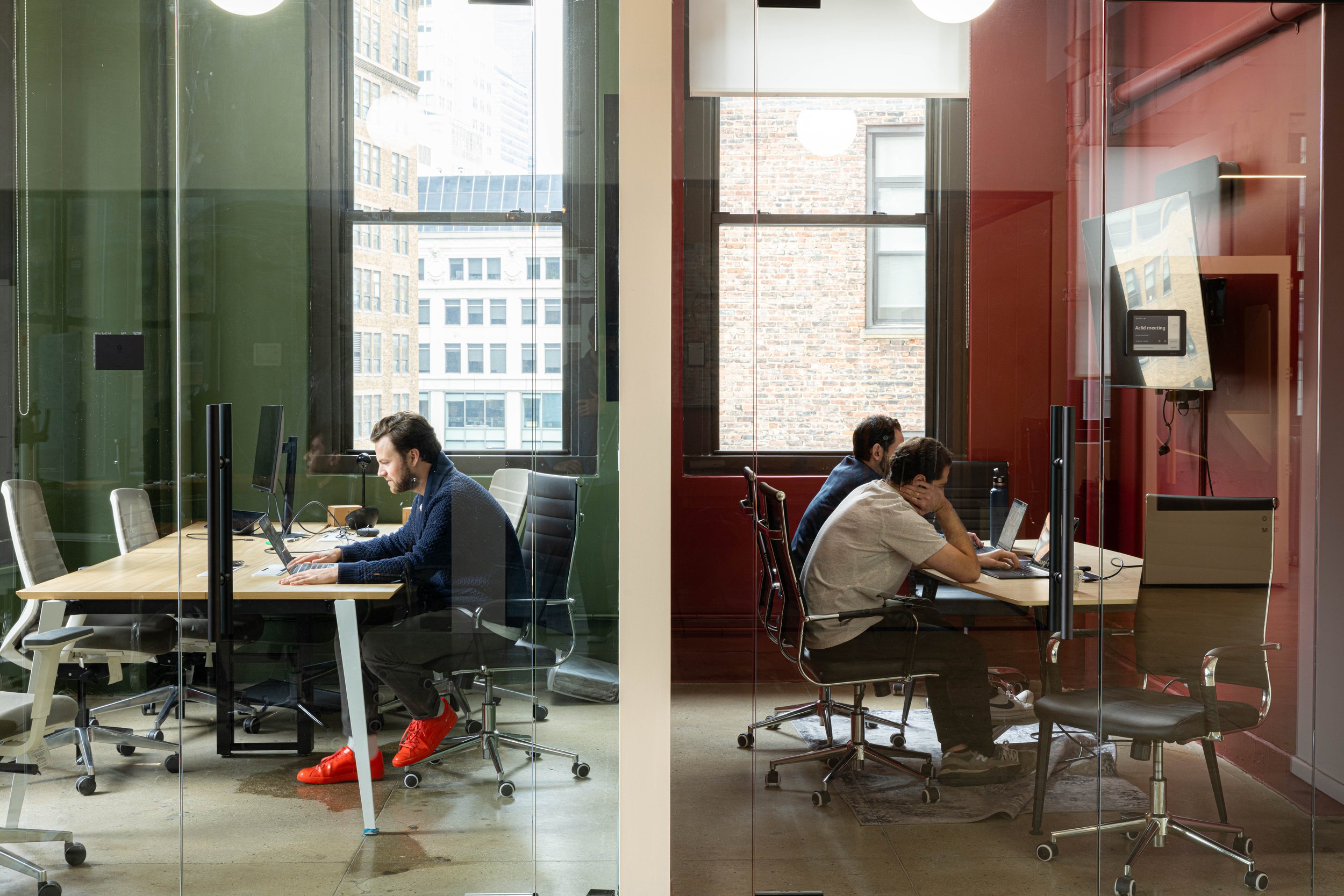
Sign a five-year lease in Manhattan, and you've made a bet based on guesswork as to where your headcount will be in 2031. That's the realistic trade-off between a traditional office and an upscale coworking space like Varo: control and permanence on one side, flexibility and amenities on the other. Startups and freelancers tend to lean toward the second. Established enterprises usually lean toward the first. Let’s explore the pros and cons, and we’ll let you use that i
Cost comparison
Traditional offices come with upfront costs that add up: things like security deposits, buildout, furniture, and often a multi-year lease signed before you've proven the space is even the right size can prove to be a lot for an up-and-coming company. Then there are the ongoing hidden costs nobody budgets for properly the first time around, like utilities, internet, cleaning, maintenance, and repairs that fall entirely on the tenant.
Coworking membership fees work differently. You're paying one predictable monthly rate that already covers utilities, cleaning, and internet. That means you’re dodging the surprise invoice that rolls around when the HVAC breaks… Because it's not your HVAC to fix. For a business trying to protect cash flow, that predictability is often worth more than a lower cost-per-square-foot on paper.
Flexibility & scalability
This is where the two models diverge most. A traditional lease locks you in for years, often three to ten of them. Coworking spaces like Varo generally run month-to-month. Scaling up for a hiring push, or scaling down after a rough quarter, doesn't mean breaking a lease or subletting space you no longer need. It’s as simple as adjusting your membership. These spaces are built around agile businesses with changing needs, so there aren’t any surprises.
Amenities and workspace experience
A traditional office gives you exactly what you build, and nothing more, unless you pay for it separately. An upscale coworking space usually comes with meeting rooms and breakout areas already built in, plus something most standalone offices never justify the square footage for: an actual wellness room. Coffee and catering are handled too, rather than falling to whoever on your team draws the short straw. The tradeoff is you're sharing all of it with other member companies instead of owning it outright… But the folks in those companies could end up becoming some of your best friends. Who knows?
Culture, branding, and control
Here's where traditional offices pull ahead. If brand identity is central to how you operate, whether that's a specific layout, custom signage, or a space that visually reflects the company, a traditional office lets you build that from the ground up with no restrictions.
Coworking spaces come with more limited customization, because you're sharing the building with other companies too. You can personalize a private suite to a degree, but the lobby, the hallways, the overall look and feel of the place aren't yours to change. For companies where branding matters less than day-to-day flexibility, that's an easy tradeoff. For companies where it's core to the business, honestly, it's worth sitting with before signing anything.
Networking and community
A standalone office can't replicate this part. Being surrounded by other companies and founders creates chance encounters that occasionally turn into referrals, new business, and as we mentioned earlier, friendships. This kind of thing just can’t happen when your team only talks to itself. A traditional office has upsides for focus and confidentiality. It also closes off the incidental networking that comes from sharing a building.
Which option suits which business
Startups generally benefit most from coworking. Capital is tight, headcount is unpredictable, and a built-in network can open doors a young company hasn't earned on its own merit yet. Remote-first teams use it as a flexible home base for distributed employees, without committing the company to a permanent footprint. Freelancers get professional space and community without leasing an entire office for one person.
Established enterprises are usually the exception. With a stable headcount and a real need for brand control, the long-term cost math and full customization of a traditional office start to outweigh the flexibility premium that coworking spaces can provide.
The space you actually need
There's no universal answer here, only the right fit for where your business is right now. If flexibility, amenities, and community matter more than full control over your space, Varo is built for exactly that. If brand control and permanence matter more, a traditional office is worth the tradeoff, even with the five-year bet that comes with it.
See the space before deciding either way. Learn more about Varo Coworking or look at membership plans to find what actually fits your team.
The Varo
